The Tunnel – preview experiment

Just trying a little experiment with ways of letting my novel The Tunnel be out in the world. Issuu is a cool way of publishing documents. Magazines seem to favour it, but then I discovered that I could publish an excerpt from my novel in a relatively straightforward way. So with a click here you can read the first 18 chapters free. Yes, this is slightly stolen from James Patterson, but I’m still learning about marketing and so forth.

At the page there’s a link to buy a print version for $11.09. I don’t know what that’s about (you can buy a print version of the whole book – 100 chapters – for $14.00 from Amazon… why buy just a segment?). Still I hope you enjoy reading a few chapters of it this way.

Free fiction: Berg – a Titanic story

Darn, I missed the – ahem – boat with getting this up on the 100th anniversary. Still it’s a story I’m pleased with. “Berg” first appeared in the Lame Goat anthology, The Next Time, and was reprinted in the Static Movement anthology About Time (which picked up many of those stories from the out of print Lame Goat volume). This piece is a short, humourous, alternate history.

The image by Reuterdahl is from Wikimedia Commons.

____________________________________________

Berg
by Sean Monaghan
copyright 2010

The Zodiac dropped two feet into the icy water and Tony realised that it must have been a different tide. He started looking for the iceberg and saw it off to port, maybe two miles away.

“There,” he said, pointing and Geoff started up the outboard, moving them across the glassy surface.

Tony scanned the horizon for lights but couldn’t see anything. She must still be a long way off. They had plenty of time. Geoff moved them up and Tony put a piton into the ice, then tied the boat up. They looked it over and decided the best place to put the explosives. Geoff got out the hot drill and they clambered up with crampons and ropes. They had to get into the heart of the berg and it took twenty-five minutes longer to drill the hole than Tony had expected. He saw the running lights on the horizon. She would arrive very soon.

“She’s coming,” Geoff said. His breath left a wispy trail. Like Tony he was dressed in full Arctic thermals.

Tony checked his watch. 11.21pm. Lots of time. He dropped the thin explosive pack down and tamped the lead to the detonator, hooked in the radio receiver and switched it on.

“She’s getting close,” Geoff said.

Tony looked and saw that the ship was perhaps a mile away. He smiled to himself as they made their way back to the boat, keeping their crampons away from the inflatable sides. Geoff backed them off and Tony realised that it would be close.

“Stop here,” he said. The ship was perhaps five hundred yards away now, already turning.

“Come on,” Geoff said.

Tony pressed the button. Nothing happened.

“Do it.”

“I did it already.” Tony pushed the button again and again. The ship was nearly on the berg.

“Too late,” Geoff said. “Leave it.”

The ship was beginning to make its gradual arc around the berg, moving slowly south of them. Tony was transfixed. It was extraordinary to watch this event occurring just yards away from his eyes. He’d seen it so many times in various movies, and reconstructions. He read about it so much he could have written a dissertation. Yet the experience was something entirely different. He felt his throat clench.

The percussive sound of the hull striking the berg gave him such a start that he dropped the transmitter.

The explosion rocked them back and Tony had to grab Geoff to stop him falling from the Zodiac. When he looked again the ship was already head down, sinking fast. It was supposed to take nearly three hours. It shouldn’t be going so rapidly. The explosives, intended to break the berg up into relatively harmless flows, must have blasted a hole in the hull and the sinking was taking moments.

They bucked in the waves as the wash from the explosion hit them. The propellers were up, the bridge already underwater. Tony remembered the Lusitania, torpedoed, taking only minutes to go down.

There was screaming and in just a few minutes the ship was gone.

“Holy crap,” Geoff said.

Tony stared at the still shivering water, listened to the screaming of the people who’d been thrown clear, freezing to death.

Geoff started the engine again.

“What are you doing?” Tony said.

“Picking them up. Wasn’t that the idea? Save their lives. We’ve surely screwed that up, so let’s do something.”

“How many do you think there are? Fifty, sixty? Most of them were in bed.”

They pulled twenty live ones from the water and got them to the Carpathia.

And that gave Tony an idea for their next try.

Geoff didn’t like that any better than the explosives, but at least it gave them a chance to get there early and stop their other selves placing the package.

A week later they dropped back into the water a couple of hours earlier. They pitoned a buoy to the iceberg with a message to themselves not to blow it up, that everything was under control, then they sprinted for the Californian.

Once aboard, in period costume they sat next to the wireless room and created their own CQD distress message. The captain started the ship moving towards the iceberg, further away than the 1912 estimate, but closer than the 1992 vindication.

“What’s he doing?” Tony said nearly two hours later as they watched from the Zodiac.

The Californian had arrived before Titanic and was slowly turning. The berg rested close by.

“He’s wondering about the distress call,” Geoff said. “This is the position, but there’s no wreckage, no boats.”

Titanic had crested the horizon and Tony realised that the Californian was dark, all the cabin lights out as the crew slept, just her small running lights showing.

“Lost amongst the stars,” Geoff said.

Tony thought he was doing poetry, but then he saw the problem. “They must see her,” he said. “They must.”

The Titanic was bearing down on the now stationary Californian. Lord had heaved to for the night again, unwilling to move into the ice field in the darkness. The Titanic lookouts hadn’t seen the berg, but surely they would see the other vessel. Surely. The big ship had a massive head of steam up. Looking for a record time. It swept past the Zodiac like a black curtain.

“This,” Geoff said, “is just one screw up from the beginning.”

Titanic cut the tiny Californian in half. The split little ship heeled over and began going down. The Titanic, slowed somewhat, still smacked hard, bow first, into the berg.

Tony noticed that their buoy was gone and saw the other Tony, and the other Geoff, silhouetted, arms upraised in disbelief.

And then Titanic began going down too. Her hull must have been cracked by the impact. Both impacts. Tony kept hoping that the watertight doors would work, but she just kept sinking. Faster.

“Any better ideas?” Geoff asked, as Titanic’s took on a list that was preventing half the lifeboats getting away.

“Maybe,” Tony said. He had to put this right. “Something much more simple.”

“Well, count me out.”

“You’ll like this, though.”

And of course Geoff did come.

They pitoned in another buoy, with instructions for the first team to leave their buoy, and not to call the Californian.

“Okay,” Geoff said when they’d backed off. “You still want me to circle the berg?”

“That’s the plan. The lookouts were searching for breaking water, but there never was any because the sea was totally flat. That’s why they saw the berg so late the other time.” Tony waved to himself in the other Zodiacs as they went around.

“Yeah, well, if this doesn’t work, neither of us get born, right?”

Both other sets of doppelgangers had got the idea and soon all three Zodiacs were circling, creating wakes that left breaking waves on the face of the berg.

Tony smiled. “It doesn’t bear thinking about. My head spins with the paradoxes.”

Imaginary Maid Forgets She is Late for a Banquet – new ebook short story

I have a new story out through Smashwords. Imaginary Maid Forgets She is Late for a Banquet is a magicpunk, or magic realism. The story was first published in the Static Movement anthology Alternate Dimensions.

The amazing cover art is by Ateliersommerland and sourced through Dreamstime. The waif has the perfect expression to suit Bianca’s character.

My little description at Smashwords goes like this: “Bianca’s had about enough of Paulette, the school bully. But when she calls up magic to help out, both girls are in for more than they bargained for. Much more.”

And though you can read the first 20% free anyway, I do like to put the opening paragraphs here for a teaser too:

_____________________________________________

Bianca sulked. She’d pushed herself into a corner of the kitchen, crouched and squeezed herself right under one of the benches.
“Bianca,” Paulette called. “Come out.” She paused, giggled a little. “Come out, come out.”
“Wherever you are,” Bianca whispered.
“I’ll teach you, you little snipe. I will teach you a lesson you’ll never forget.”
Bianca looked around the corners of the tiny dark space. She needed magic.
______________________________________________

Hospital anthology now available

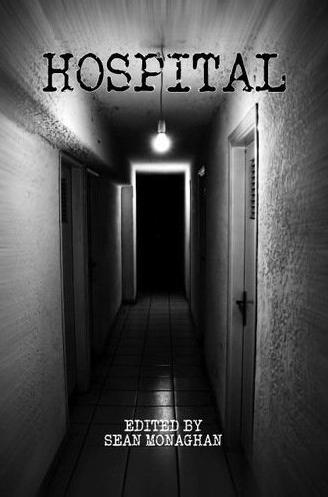
One of the Static Movement anthologies I’ve been editing is now complete and available from Amazon. This is a collection of (mostly) horror stories from a group of talented writers – some new and some familiar to readers of Static Movement anthologies. From danger in space, to crazed physicians, to abandoned wards and standup comedians, the anthology covers a lot of territory. Hospitals seem to provide a fertile ground for writers – after all these institutions are where were often at our most vulnerable and also have to be at our most trusting. There was a little space at the end there, so I managed to sneak one of my one stories in – “Finding Keys” is a flash fiction story originally published in MicroHorror in 2010 – click on the link if you want a little taste of the anthology.

Buy the anthology from Amazon! It’s $14.99, plus shipping (it seems there are some “used” copies already available for $48.00 plus shipping, which seems pretty odd to me… it’s a P.O.D., just released: how could there possibly be any time for it to become used? And why buy it for $48.00? The world just gets stranger).

I still have two anthologies open for submissions at Static Movement: Dieselpunk, and A Butterfly in China – self-explanatory titles, I hope. If you’ve got a story that might fit in those, send it along (guidelines are at the links. These are for-the-love anthologies).

Writing fast


So it’s the end of March and I’m looking at where I am with my writing. My goal is to write 300,000 words during the course of the year. Publishable words, that is. Certainly the goal is changing as I go, and feedback on the rejections, the hold-requests and acceptances is helping with my focus (I did add into the goal that I also want to publish 300,000 words during the year – not counting reprints).

One thing I hadn’t figured on, however, was a big change in the structure of tutoring: much more online, more hours and more deadlines spread through the year. I had been looking at having big blocks of time between the portfolios to really focus on writing, and those blocks have turned out to be very small. This spread has, at the moment, meant that I’m writing alongside the tutoring and so, somehow, still maintaining my minimum of 1000 words a day (I do have a day job as well as the part-time tutoring in case you think I’m just goofing off).

I have written a complete novel, seven stories of various lengths (from 665 words up to 13,000) and I’m currently half-way through the next novel. The first novel has been (self) published, as have four of the stories (two under pen names) – one of those on MicroHorror, rather than self-published (that’s the 665 word flash fiction piece). The other stories are on submission with publishers, or still being tinkered with (I might be writing pulp, but I’m going to fine-tune the literary story for the national competition).

So, a quarter of the way through the year and I’m just a little ahead of a quarter of my publishing target (80,000 words published) and more than halfway towards my total goal: more than 150,000 words written so far. I’m surprised, stunned and stoked that it’s going this well this early. I don’t know if I’ll manage another 150,000 in the next quarter (tutoring does hot-up a little), but the momentum is there. And I still have more ideas than I have time to write.

Writing well and writing badly

As I progress through my “year of writing pulp”, I’m certainly learning a lot about myself as a writer. As with any writer, I have ups and downs and I have stories that are more successful (in the storytelling sense) than others. Sometimes it’s easy to feel down when a story isn’t working out. I begin to wonder if I’ll ever have another decent story in me. I guess I’m always measuring against my last best story. And that may be two or three (or more?) stories back.

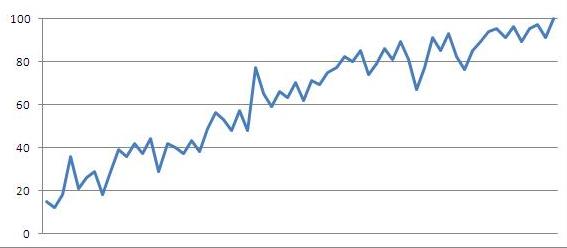
The reality is that (as with most writers again) I feel like I’m getting better in general. See the graph of story quality here, with the zero to one hundred as the quality measure and the left to right as progress over time. In the early days most (ie, all) of my stories were lousy (say, a fifteen on the quality scale – at least they had reasonable grammar), but over time I’m getting better at the process of storytelling. Sometimes I stumble a little and drop down the quality line, but the general trend seems to be towards the upper end. (You understand, of course, that the ‘quality’ graph here is a purely arbitrary thing, for the sake of illustration. It’s not something I can measure in a scientific way).

This thought perhaps comes out of struggling with a chapter of my new novel that felt dead and lifeless and was a struggle to write; and then going into the next chapter which almost burned up my keyboard it was coming out so fast and easily. A novel is different to a story (that dull-ish chapter has a place in terms of pace and the mindset of the character), though I can see how some of my stories might have been dullish in places (or right through).

Pace is still something I’m learning about – recent rejection letter feedback suggested that one of my longer stories, while very good, did “drag quite a bit in quite a few places”. That’s kind of the opposite to some other feedback on another story (an accepted one – “Pan Am 617 Heavy”, which you can read here at Bewildering Stories) that pointed out (rightly) that the story was “somewhat relentless: the action is non-stop and neither the characters, nor the reader, seem to get a moment to breathe” (I’m paraphrasing those comments here). That kind of feedback certainly informa how I’m looking at my action/pulp stories now: time to breathe without dragging. It seems like good writing advice all around.

Anyway, I’m looking forward to improving on my last best story.

The value of a good cover

________________________________________________________________________
Currently I do the illustrations for all of my book covers. I have a little bit of an art background (in fact have even had some exhibitions), so while I’m no professional I like to think that I have a reasonable idea of how to make a reasonable picture. Sometimes my covers work and sometimes not so much. Case in point here is my cover for my story Stone Goddess. I had the idea – to suit the story – of a pile of rocks that kind of looks like a statue. I attempted a blend of the rocks with the image of the statue (all rendered in Bryce). There are some elements that work, but I’m not convinced that this cover is going to sell many copies of the story (I think the story is one of my best, but so far has sold zero copies on Smashwords).

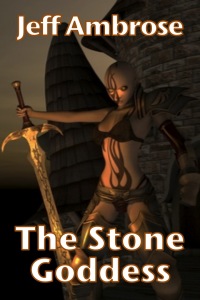
I was following Jeff Ambrose (another writer who’s inspired me on writing goals) and found his post about working on his covers. Now I though his covers were pretty good to start with, but some of his new ones are just leaving me in the dust. Look at the one here (used with his permission for illustrative purposes) for his story The Stone Goddess. Wow (and yikes, practically the same title). That illustration is so professional that it ought to help him sell an awful lot of copies of the story. (I’m terrified to read his story for fear that not only is the cover better, but so is the story).

That said, he is using dreamstime (an online resource where artists sell the rights for the use of their illustrations), so the covers are going to be pretty professional. Maybe I should take a lesson from Jeff and start investing a little money, rather than time – especially when a cover isn’t working out so well.

Maybe I’ll buy one of Jesse-lee Lang’s illustrations (she did the picture on the cover of Jeff’s story), and go head-to-head with Jeff.

NB: Cover Art Copyright © by Jesse-lee-Lang, Dreamstime.com

Book in hand, typos… in hand

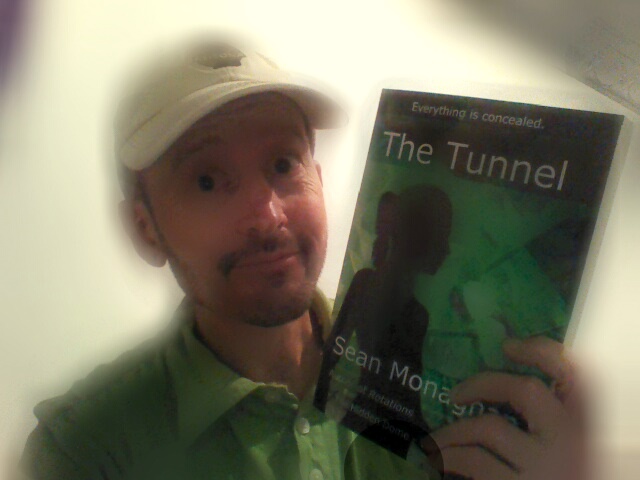
The proof copy of the paperback edition of The Tunnel arrived today. It’s very cool, I’ve got to say, to hold the physical result in my hands (as you can see from that goofy grin). The idea of a proof copy, I guess, is that final check before it gets properly published. I knew there would be some tinkering with the cover to do, but what I didn’t expect was to open it up and spot a typo immediately. This is after three proofreads (one by me, and one by someone else [who’s not to blame at all!] and another by me). It’s just a silly thing too – an “at” when it should be “as” – which makes that sentence (“And as Morgan was leaving…”) make no sense at all. Guess I’m going to have to proof the whole thing again. I might have to do that backwards. At least I know that the ebook version is correct (checked it just now – I guess I got the paperback proof printed before that final proofread. Silly).

The Tunnel – The Hidden Dome Volume 1: new cover and updated text

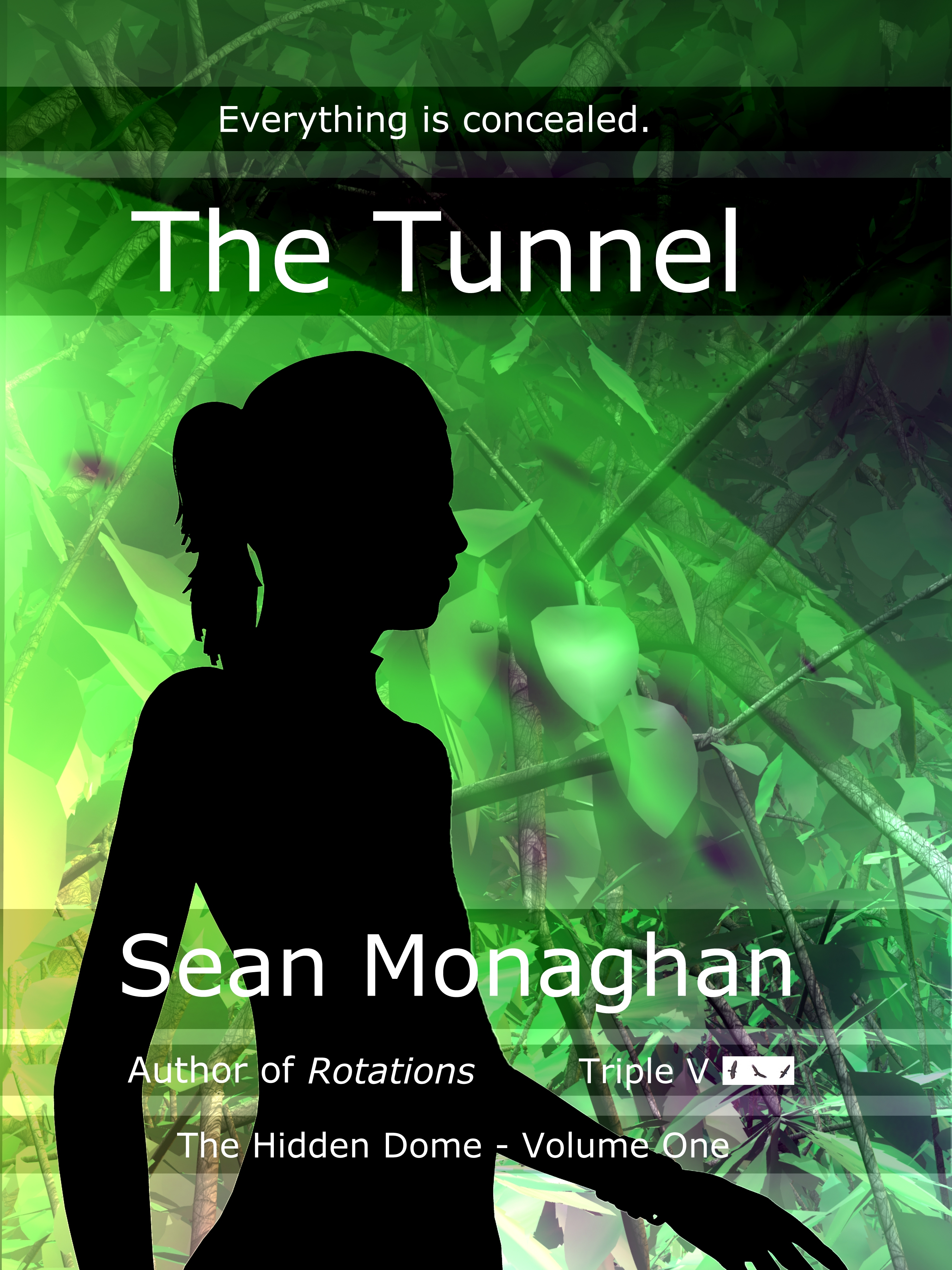
My novel The Tunnel, available at Smashwords and other ebook retailers, has a new cover (subtly nicer, I think, richer colours, better layout) and (very importantly) updated text. It’s been proofread (yet again) and more typos have been corrected, plus a few clunky sentences. I seem to have this habit of dropping the last letter from a couple of words (“her” for “here” and “the” for “they”) and missing it in initial proofreads. So now it looks better and reads better.

The little pic here is how the old cover looked, for comparison’s sake.

Careful what you wish for: rejection slips

I got a rejection slip today. That means I’m down to thirteen live submissions.

This slip was one of the nicer ones, I’ve must say, in that it included some feedback – fair and fairly positive – from the first readers, with comments like these below:

“[T]his is a complex idea. You’ve only barely touched the surface. The writing is solid and workmanlike, but because the central concept is so complex, you’ve been unable to offer much of characterisation, or setting, or colour.”

“This should be a novella-length piece, so you can do justice to the main concept. Accepting it in this form would be wrong for both you, and [our publication].”

Fair enough. Decent food for thought. It is a very stripped back story, one that I had worked on for a long time. The first versions were five or six thousand words long and really didn’t work so well. The final version is 1600. That’s barely more than flash fiction.

Perhaps this is a case for writing a longer version (again). I’ve done that before – my novel Rotations originated from a flash story, as did my forthcoming novel The Room (that flash story – “Don’t Sleep Downstairs” – is still available at Flashes In The Dark.

I had planned on writing a couple of short novels this year, amongst all the other stuff, and I am writing longer these days (that rejected story was written and rewritten quite some time ago).

Now that I think about it my latest novel – The Tunnel – was going to be a short novel (it went to over 60,000 words when I was expecting 25,000 – as I was getting into it I realised that it had to be bigger). I’m feeling more confident with longer forms these days (most of my current submissions are from 5000 to 20,000 words), a far cry from my period of focusing on flash fiction.

I guess that’s a project for later in the year – take that “solid and workmanlike” writing and develop the story with some characterisation, setting and colour. 🙂

In the meantime, the story is going back out to find a publisher who might like it in this form (I still think it works as is – a spare and stark piece). Then I’ll be back up to fourteen live submissions.