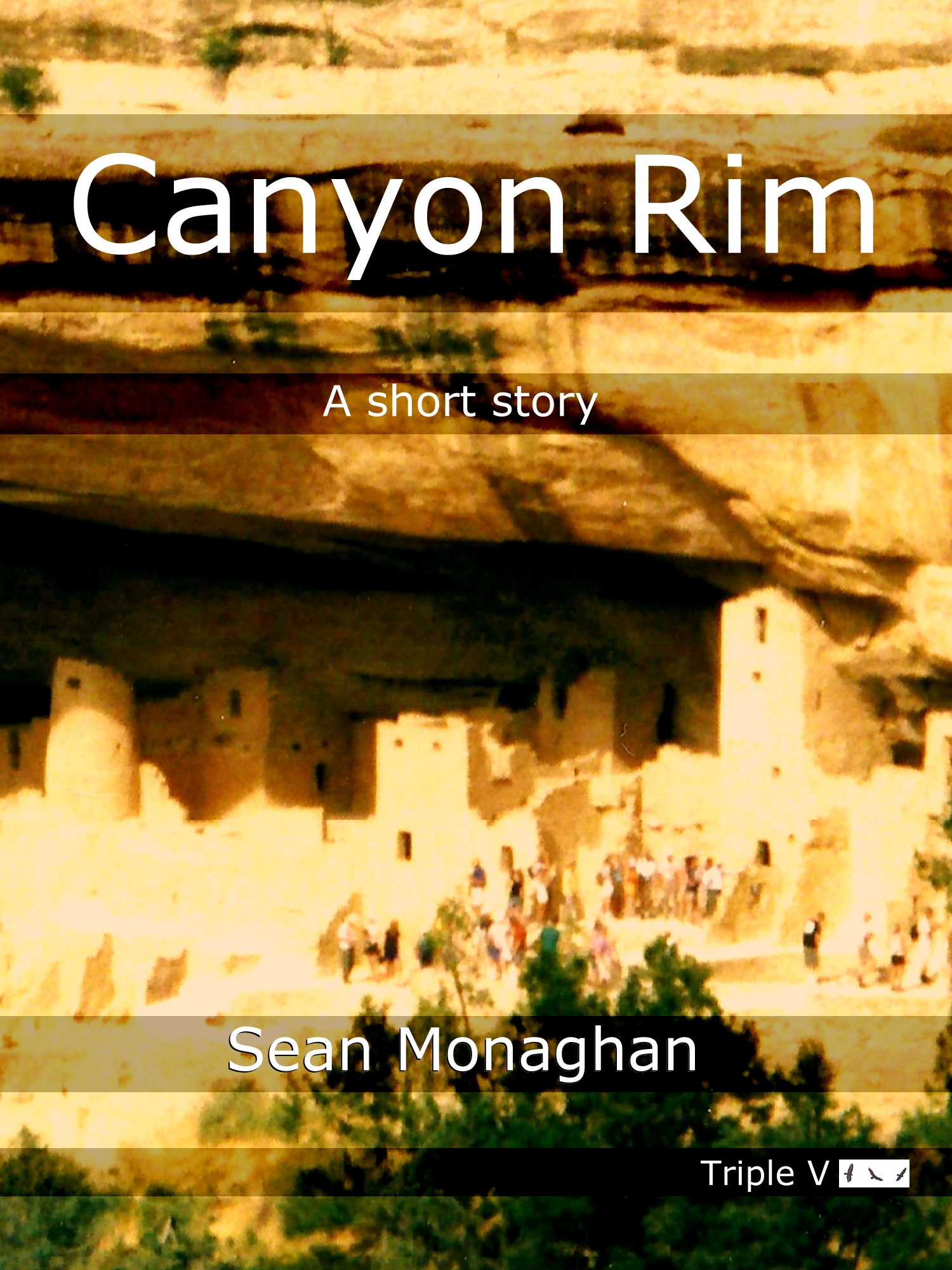
Perhaps in a little contradiction to my posts over the last couple of days, I’ve put my literary story “Canyon Rim” up through Triple V. The story is not pulp. It is literary, as much as I write literary pieces. There is a story to it (a man’s search for safety), but it is perhaps as much an exercise in voice. It’s written with a focus on language and rhythm. Have I succeeded? I hope so.
I tutor for a university course in literary fiction and some of the tenents include ideas such as “fiction’s only rule is that it must compel the reader”. As a literary course, it’s focus is as much on language as on story – the idea that we do thirst for language and that the nuances of skilled writers can tantalise and draw us forward with deft and bold touches.
I do admire literary writers and their skill with language. Too often, though, it seems that the cleverness with language becomes too much the concern and that compelling aspect is lost (on me, at least). I like a balance: strong and articulate language that remains readable, with a true story and engaging characters.
Canyon Rim is perhaps as close as I will come with literary works, though I have a few others up my sleeve that will likely show up over time. Squeezed out in between the pulp (if that makes any sense).

Here’s the opening
__________________

Ernie Freiden had been born to a Canadian father and an Australian mother. Both had been vacationing through the national parks of Utah and Colorado when they met in 1982. Shirley had quickly abandoned the German tourist she’d been traveling with, and taken up with Thomas, in Moab, near Arches National Park. The German, Shirley later told Ernie, though through into his adult life he heard different and increasingly unlikely versions of the story, had flown back to Germany, almost immediately, and years later had been crushed to death in a museum accident by a part of the Berlin wall he was helping to put on display after the reunification.
Thomas, Ernie’s father, had quickly (though not as quickly as the German’s departure from U.S. soil) had his name abbreviated to Tom, and complained little about that, after all Shirley was as decisive a woman as Tom had ever encountered and what was a slight adjustment to his name in comparison to her company?

__________________
 
The story is scheduled for publication in the Static Movement anthology Sleepwalkin’ and Picklockin’ sometime in 2012 and I’m grateful to editor Chris Bartholomew for releasing it to Triple V so it might garner a few readers in the meantime.

Why write pulp?


Following yesterday’s post, I’ve thought about why I’m writing about writing so much so fast.

Believe me, I do enjoy literary works, well, mainstream literary. Richard Ford, John Irving, Richard Russo, Anne Tyler, Jane Smiley, Annie Proulx are among my favourite writers. I enjoy the nuances they are able to bring to their writing, their skill with language and narrative. I have written, and even published, numerous literary stories, where I’ve polished and honed the words, where I’ve edited out sections or rewritten entirely from scratch, and often I’m proud of those pieces.

That said I’m having fun just writing pulp. Now, I’m not saying my writing is especially good (the reader can judge that), but I’m focusing on the story and trusting that my writing will carry it. What I’m finding currently is that as I go I’m paying more attention to the words where before I would have thought, “Well, I can fix that later in revisions”. Part of this comes from finding over the last year that my stories seemed stronger on their first draft without too much tinkering, part comes from reading about other approaches. Dean Wesley Smith has a good post here about not revising until a story has become just white paste.

Not interested in white paste. Looking for story. That’s why I’ll be writing pulp fiction for a while yet.

Word counts, goals and publishing


Around Christmas, following on from Jeff Ambrose I created a word count goal fro 2012. 300,000 words, from 300 available writing days. Just 1000 words a day. As I wrote rapidly for the first week, I realised that I needed to add a couple of things to keep myself going, focused and effective.

Firstly that 1000 words is a minimum. In the first couple of days – January 1st and 2nd – with no other commitments, family, work or otherwise, I wrote 5500 words each day. It would be simple to think that, well, that’s the first eleven days worth knocked off. Nah. Better to reset the counter each morning. So, it’s been a good first week (close to 20,000 words), but this week I’ll be shooting for 1000 words a day again. Each and every day. BTW, a writer friend did suggest I make sure I don’t burnout on that. Can’t see it, but I will monitor things, definitely.

Secondly (and this is for readers more than writers) that’s got to be 300,000 publishable words. Not just spouting, not just rushing to wear out a keyboard. I saw that writing volume is one thing, publishing is another. So that’s my promise. There will be good stuff coming out. Not to say that it’s going to be perfect and nuanced and highly literary – these days I’m more of a pulp writer (though I do tutor in literary craft, and have written and had published numerous literary stories) – but it will be entertaining and readable and compelling.

I have several stories scheduled for publication in various print and online journals, which amounts to arout 50,000 words (as well as several reprints, but I think I should do this without relying on reprints). I have another 60,000ish out on submission to publishers, with another big story heading out this week. If those get rejections all around then I will indie publish them. I feel in good shape.

I will also have to create time for editing, revision, proofreading, reading other writers, editing anthologies, etc.